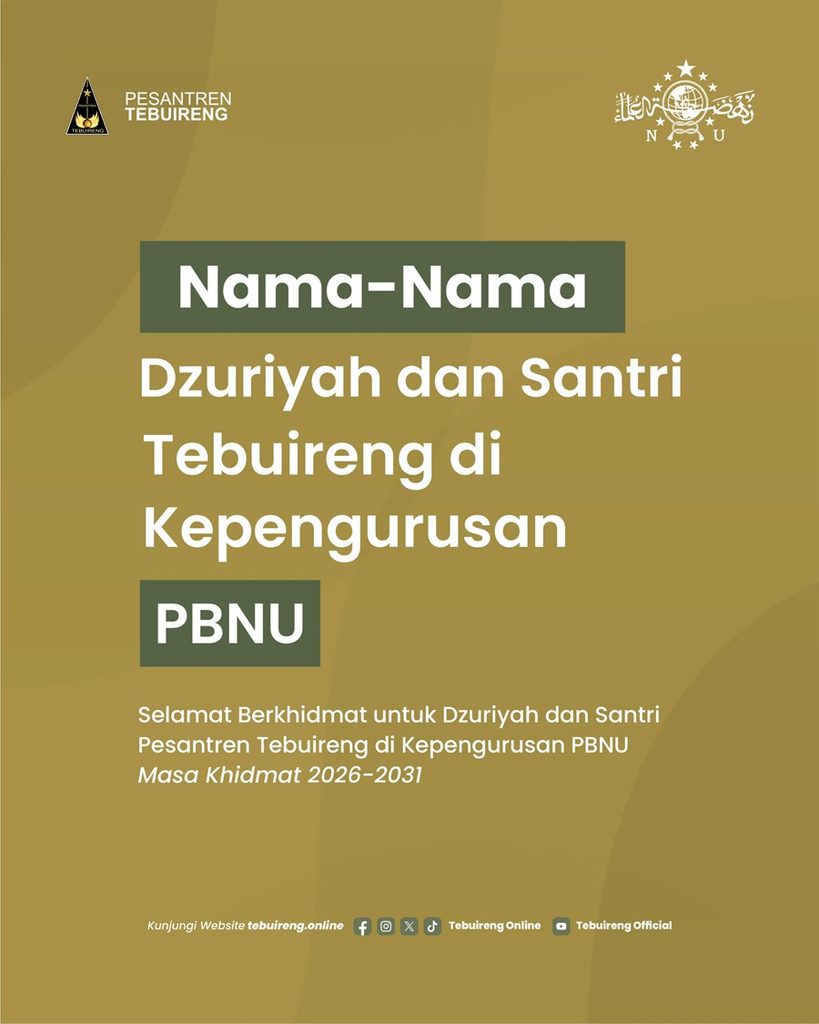
Inilah Deretan Dzuriyah dan Santri Tebuireng dalam Sktrutural PBNU Masa Khidmat 2026-2031
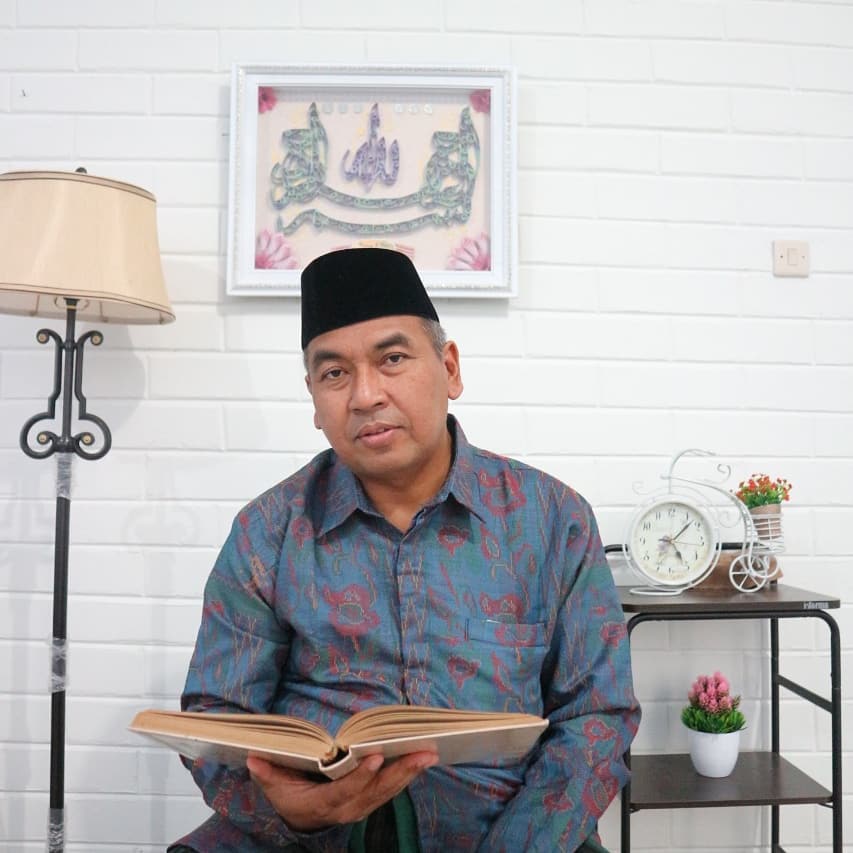
Tebuireng.online– KH. Abdul Hakim Mahfudz, Pengasuh Pesantren Tebuireng dan Ketua Umum Pengurus Besar Nahdlatul Ulama (PBNU) secara resmi mengumumkan susunan kepengurusan PBNU masa khidmat 2026-2031, di gedung PBNU, jalan Kramat Raya 164, Jakarta.
Pengumuman tersebut dihadiri secara langsung oleh Rais Aam PBNU KH. Miftachul Akhyar, Katib Aam PBNU Prod KH. Mohammad Nuh, Ketua Umum PBNU KH. Abdul Hakim Mahfudz (Gus Kikin), beserta Sekretaris Jenderal PBNU, Gudfan Arif.

Adapun dalam struktural PBNU yang dipimpin oleh KH. Abdul Hakim Mahfudz, terdapat beberapa nama-nama Dzuriyah dan Alumni Pesantren Tebuireng yang turut mengabdi di jajaran PBNU masa khidmat 2026-2031. Berikut nama-nama tersebut.

Mustasyar:
Prof. Dr. KH. Ma’ruf Amin
dr. KH. Umar Wahid
Nyai Hj. Sinta Nuriyah
Dr. KH.Irfan Yusuf
Prof. Dr. Masykuri Abdillah
Katib:
Dr. Ahmad Ubaidy Hasbillah
A’wan:
Dr. H. Ahmad Roziqi

Ketua Umum PBNU:
KH. Abdul Hakim Mahfudz
Wakil Ketua Umum:
Irfan Asy’ari Sudirman (Gus Ipang)
Ketua:
KH. Ahmad Rafiuddin
Dr. H. Puji Raharjo
Dr. KH. Syamsul Ma’arif
Dr. dr. Gus Chamim Shobari, Sp.OG.
H. Teguh Dartanto, Ph.D.
Sekjen:
Gudfan Arif, S.IP
Wakil Sekjen:
Dr. KH. M. Shalahuddin A. Warits
Selain diisi oleh banyak Dzurriyah dan Alumni Pesantren Tebuireng, susunan struktural PBNU juga mengadeng beberapa nama, seperti Jusuf Kalla, Prof. Mahfud MD dan Gus Baha yang berada dalam satu barisan pengurus PBNU Masa khidmat 2026-20230.
Adapun KH. Abdul Hakim Mahfudz, selaku Ketua Umum PBNU menjelaskan terkait banyak merangkul dan masuknya tokoh-toko besar seperti yang telah disebutkan di atas, adalah wujud nyata dari ikhtiar organisasi dalam membangun kebersamaan yang inklusif.
“Ya itu kan termasuk dari warga NU, itu dari olahraga, dari orang tuanya pun sudah NU. Maka kemudian kita memang membangun kebersamaan,” ungkap KH. Abdul Hakim Mahfudz, Ketua Umum PBNU.
PakarPBN
A Private Blog Network (PBN) is a collection of websites that are controlled by a single individual or organization and used primarily to build backlinks to a “money site” in order to influence its ranking in search engines such as Google. The core idea behind a PBN is based on the importance of backlinks in Google’s ranking algorithm. Since Google views backlinks as signals of authority and trust, some website owners attempt to artificially create these signals through a controlled network of sites.
In a typical PBN setup, the owner acquires expired or aged domains that already have existing authority, backlinks, and history. These domains are rebuilt with new content and hosted separately, often using different IP addresses, hosting providers, themes, and ownership details to make them appear unrelated. Within the content published on these sites, links are strategically placed that point to the main website the owner wants to rank higher. By doing this, the owner attempts to pass link equity (also known as “link juice”) from the PBN sites to the target website.
The purpose of a PBN is to give the impression that the target website is naturally earning links from multiple independent sources. If done effectively, this can temporarily improve keyword rankings, increase organic visibility, and drive more traffic from search results.